Friday, March 14, 2025

創新「珠串組合益智積木」顛覆分子建模技術

創新「珠串組合益智積木」顛覆分子建模技術

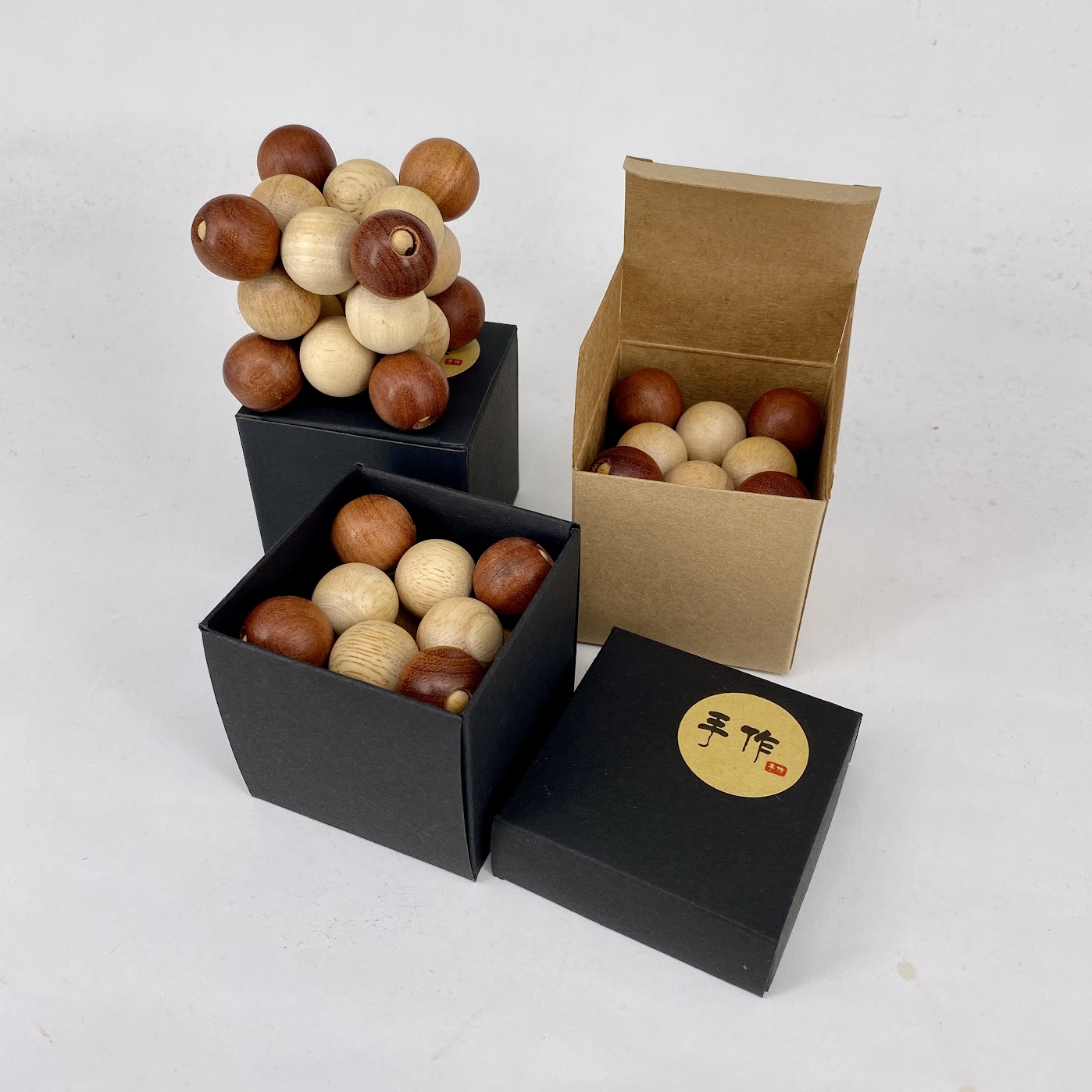
國立台灣大學金必耀(Dr. Bih-Yaw Jin)與左家靜共同推出一項突破性的珠串組合益智積木(Bead-Chain Construction Set),這項創新技術提供了一種全新的分子建模方法,不僅簡化了籠狀烴(cage-like hydrocarbons)的建構過程,還融合了圖論、化學與拼圖解謎的元素,為科學研究與教育帶來全新視角。

分子可視化的革命性突破

傳統的分子建模技術主要依賴於固定的預製模型或繁瑣的串珠技術,兩者皆有其限制。而珠串建構組合突破了這些瓶頸,透過預製的線性五珠串(Five-Bead Chains),讓組裝過程更加直覺、快速且靈活。

金必耀表示:

"這種方法將分子建模轉化為一種富有挑戰性的拼圖遊戲,使其不僅適用於科學研究,也更適合學生學習與探索。"

技術創新亮點

  • 快速且高效的組裝:不同於傳統串珠技術需要逐顆穿線,此方法透過模組化的珠串交錯拼接,大幅提升建構效率。
  • 互鎖拼圖式設計:整個組裝過程類似於拆裝拼圖(Interlocking Puzzle),讓分子建模變得更具教育性與趣味性。
  • 圖論與化學的結合:分子骨架對應於三價圖(Cubic Graphs),將化學與數學結合,為分子建模帶來新視角。
  • 適用多種籠狀烴分子:該技術適用於如立方烷(Cubane, C₈H₈)、十二面烷(Dodecahedrane, C₂₀H₂₀)及富勒烷(Fulleranes, C₆₀H₆₀)等分子,展現極高的靈活性。
  • 美觀與教育價值兼具:不同顏色的珠串可增強視覺辨識度,特別適合化學教育與實作學習。

橋接科學與教育的應用潛力

這項創新技術不僅提升了分子建模的效率,也為化學教育帶來新的學習方式。透過互動式拼裝,學生能更深入理解分子結構,遠離過去被動學習的模式,成為STEM 教育(科學、技術、工程、數學)的絕佳教具。

未來展望與應用機會

「珠串建構組合」預計將受到教育機構、科學研究單位及材料科學領域的廣泛關注。研究團隊希望未來能將這項技術應用於更複雜的分子建構,甚至發展成互動式學習工具,推動分子建模技術的普及與發展。

珠串組合益智積木的創新性

Bih-Yaw Jin, Bead-Chain Construction Set and Interlocking Puzzle Inspired by Polyhedranes, Proceedings of Bridges 2019: Mathematics, Art, Music, Architecture, Education, Culture, 553–556.

本研究提出了一種 全新的分子建模方法——珠串組合益智積木(Bead-Chain Construction Set),簡稱 珠串積木,與傳統的分子模型套件或數學串珠技術相比,具有顯著的創新性。

1. 預製珠串,提升組裝效率

  • 傳統的數學串珠(Mathematical Beading)需要逐顆穿線,過程繁瑣且易出錯。
  • 新方法不需要逐步串珠,而是利用預製的線性五珠串(Five-Bead Chains)作為標準化建構單元,透過交錯連接快速組裝分子結構。

2. 互鎖拼圖式的組裝方式

  • 分子模型的建構類似於拆裝拼圖(Interlocking Puzzles),這不僅使其具有教育意義,也增加了趣味性。
  • 不同的珠串交錯方式可以產生多種可能結構,帶來組合挑戰,這與傳統的剛性分子模型不同。

3. 針對籠狀烴的通用性與靈活性

  • 該方法適用於所有籠狀烴(C₂ₙH₂ₙ),包括四面烷(Tetrahedrane)、立方烷(Cubane)、十二面烷(Dodecahedrane)等。
  • 只需一種標準化五珠串,即可建構不同分子結構,概念上更為簡潔統一。

4. 分子建構與圖論的數學關聯

  • 研究揭示了珠串模型與三價圖(Cubic Graphs)之間的關係,提供了一種新的數學視角來理解分子結構。
  • 組裝一個籠狀烴模型,相當於尋找對應三價圖的「n 筆畫不重疊繪製」方式,這具有數學與計算上的新穎性。

5. 美學與教育價值

  • 使用不同顏色的珠子,不僅讓結構更清晰,還能增強視覺吸引力,使複雜分子結構更直觀易懂。
  • 由於其模組化、可拆解的特性,適合作為化學教育工具,讓學生透過動手拼裝來學習分子結構。

與現有方法的比較

特點 傳統分子模型 數學串珠 珠串積木
建構方式 預製剛性零件 逐顆串珠 預製珠串,交錯拼裝
靈活性 固定連接 需精細技術 允許多種組裝方式
使用難度 需搭配特定模型 需手工串珠 容易上手,適合初學者
圖論關聯 無 無 直接對應三價圖問題
教育價值 靜態展示 需技術經驗 互動式拼圖,提高學習興趣

結論

珠串建構組合提供了一種嶄新、高效且富有挑戰性的分子建構方式。
透過簡化組裝過程、引入圖論視角,並結合美學與教育價值,它在化學建模領域中開闢了一條新的道路,使分子結構的可視化變得更加直觀、靈活且富有趣味性。

、

Friday, January 3, 2025

Bead-Chain Molecular Models

This blog post describes bead-chain models, a novel method for building tensile structures. The models, using interconnected, pre-tensioned bead chains, demonstrate the principles of tension and repulsion in creating self-balancing structures. Examples include building a cube and tetrahedron, and applications extend to modeling molecular structures like cubane, showcasing the potential of bead chains in visualizing complex chemical bonds. The post also highlights the author's related artwork and publications presented at various Bridges conferences.

Podcast: Bead-Chain Molecular Models

The Five-Bead Chain Theorem for Polyhedranes


林映廷, 金必耀, 珠串組合分子模型—多面體烷的五珠串定理, 化學 第七十七卷第四期 405-411 頁 2019.

Ying-Ting Lin and Bih-Yaw Jin, Bead Chain Molecular Models: Five-bead Chain Theorem, CHEMISTRY (Chemical Society Located in Taipei) Vol. 77, No. 4, pp. 405-411, 2019.
DOI: 10.6623/chem.201912_77(4).002

This research paper mathematically proves that any polyhedrane molecule (CnHn) can be constructed using only five-bead chains, where each chain represents specific chemical bonds. The proof utilizes Peterson's perfect matching theorem to demonstrate the existence of resonance structures in fullerene graphs. The authors connect the arrangement of beads in the model to the concept of perfect matchings in graph theory. This innovative molecular model provides a visual representation of molecular structures, including resonance structures. The paper also explores non-uniform chain lengths and Hamilton cycles within the molecular structures.

Podcast: The Five-Bead Chain Theorem for Polyhedranes

Bead Chain Molecular Models of Regular Polyhedranes


金必耀-電子雲價球分子組合模型 化學 第七十七卷第一期 99-109 頁, 2019.

Bih-Yaw Jin, Valence Sphere Models Comprising of One-Dimensional Bead Chains: Polyhedranes as Molecular Assembly Puzzles, CHEMISTRY (Chemical Society Located in Taipei) Vol. 77, No. 1, pp. 99-109, 2019. DOI: 10.6623/chem.201903_77(1).001

This research article details methods for constructing molecular models of polyhedranes—cage-like hydrocarbon molecules—using bead chains. The authors present solutions for building models of tetrahedrane, cubane, and dodecahedrane, transforming the construction problem into a combinatorial puzzle solved via Schlegel diagrams. They propose a conjecture that any C2nH2n hydrocarbon can be built with n five-bead chains. The article includes detailed construction instructions and discusses the mathematical and chemical principles involved. The process is framed as a unique type of puzzle with aesthetically pleasing results.

Podcast: Bead Chain Molecular Models of Regular Polyhedranes

Valence Sphere Models from Bead Chains: Polyhedranes as Molecular Puzzles


金必耀 電子雲價球分子組合模型 化學 第七十七卷第一期 99-109 頁, 2019.

Bih-Yaw Jin, Valence Sphere Models Comprising of One-Dimensional Bead Chains: Polyhedranes as Molecular Assembly Puzzles, CHEMISTRY (Chemical Society Located in Taipei) Vol. 77, No. 1, pp. 99-109, 2019.
DOI: 10.6623/chem.201903_77(1).001
This research article presents a new method for creating valence sphere molecular models using pre-assembled one-dimensional bead chains. The technique allows for the construction of various alkane molecules, including complex polyhedranes, by connecting these chains in specific ways. The process is likened to solving a mathematical puzzle, offering a unique approach to visualizing molecular structures and electron cloud distribution. The method is demonstrated for various molecules and extended to inorganic systems like perovskites. The authors explore the connection between this model and existing valence sphere models and VSEPR theory.

Podcast: Valence Sphere Models from Bead Chains: Polyhedranes as Molecular Puzzles